
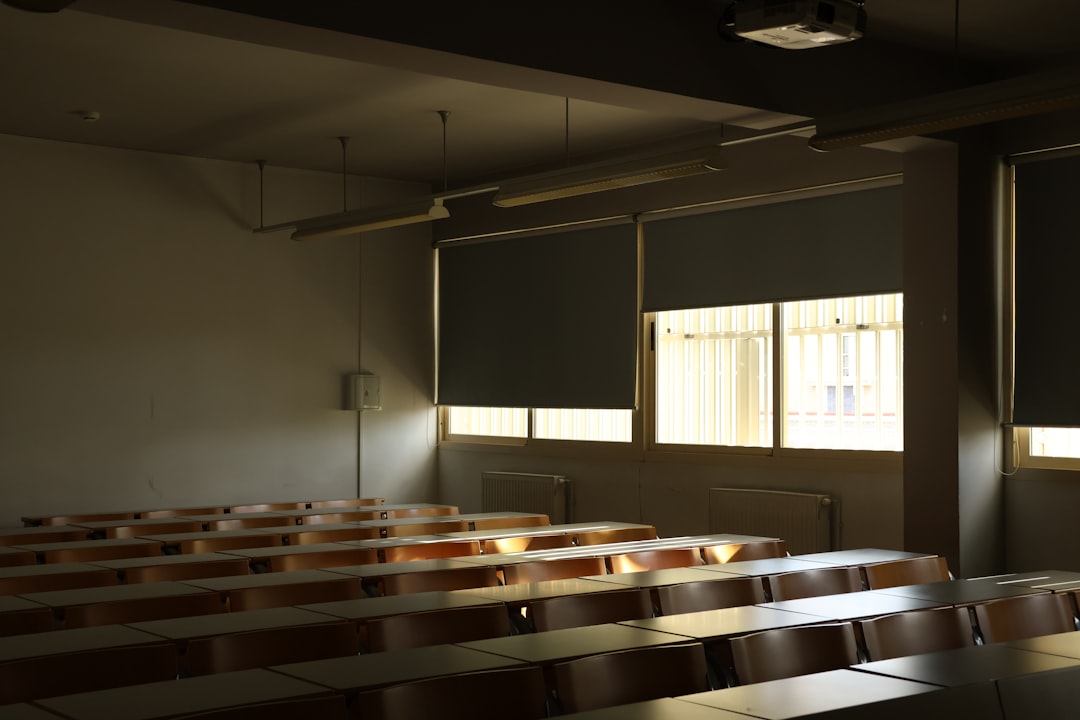
You have not set foot in a high school in decades. Your kids graduated years ago. And yet, there you are at 2 a.m., standing in a hallway, heart pounding, trying to figure out where your Math class is. You had no idea you were enrolled. The exam is today. And you have not shown up once all year.
Then you wake up. Relieved. And a little unsettled.
Sound familiar? You are not alone. An Amerisleep survey of more than 2,000 people found that being back in school is one of the most common recurring dreams around, right up there with falling and being chased. A Psychology Today blog that gathered descriptions of people’s recurring school dreams found the most common version was nearly identical to that one: discovering you were enrolled in a class, never attending, and scrambling to find the exam room when it finally counts.
Three experts (two psychotherapists and a professional dream analyst) sat down with Reader’s Digest to explain what is really going on. Here is what they found.
Why your brain keeps going back to school
Manhattan-based psychotherapist Katie Rose describes your sleeping brain as a kind of warehouse. All day, new experiences get dropped off. At night, brain networks involving the hippocampus and amygdala (which handle memory and emotion) sort through everything and file it away.
During REM sleep, levels of certain neurotransmitters shift. Acetylcholine rises, stimulating vivid imagery. Norepinephrine and serotonin drop. The brain’s logic center goes relatively quiet. That is partly why dreams can feel so strange and so emotionally real at the same time.
As clinical psychologist John Mayer, PhD, puts it: “The visual brain is creating, the emotional brain is reacting, the memory system is supplying material, and the logical brain is operating with reduced supervision.”
So where does school come in? Our experts point to a few reasons it keeps showing up.
- It holds the most emotional material. Rose explains that we spent thousands of hours of our formative years in school. We experienced intensely vulnerable situations there, often for the first time. Embarrassment, rejection, early success. “If our brains are trying to work out a feeling,” she says, “it may return to school to try to understand the origin of that feeling.”
- It was our first taste of pressure outside the home. Mayer says the certainty of stress in school was extremely high and that was the first time most of us faced that kind of pressure away from family. “That’s significant and embedded in our brain,” he says.
- It became the blueprint for work stress. Professional dream analyst and author of Dream on It, Lauri Loewenberg, says school was “the original training ground for job stress, where we first learned the pressure of deadlines, preparation, performance, evaluation, competition, fitting in and moving up to the next level.” Because those associations were formed there, she explains, school remains the face your subconscious gives to career stress, even decades after graduation.
- It can be triggered by everyday things. Mayer notes that dreams are always triggered by something in our environment. Back-to-school season: store displays, kids heading back to class, the rhythm of the calendar can seep into your dreams without you even noticing.
What each type of school dream actually means
Not all school dreams carry the same message. Here is what the experts say about the most common ones.
You have not studied for the big test
This is the most common version. Mayer hears it constantly in his practice, patients dreaming they have a test coming and are completely unprepared, or that they never actually finished their degree and are secretly an imposter.
Loewenberg connects it directly to waking life: “This dream is often connected to feeling unprepared for an upcoming situation that feels like a big deal. It could be anything from a board meeting or job interview to something more personal, like meeting your future in-laws for the first time.”
Her suggestion: ask yourself where you feel like you need to prove yourself right now but are feeling uncertain. “Your dream may be highlighting an area where your confidence needs to catch up with your expectations,” she says.
You cannot find your classroom
According to Loewenberg, this one is about searching, not the test. “This dream is often the result of feeling that you aren’t where you should be in some area of your waking life,” she says. The classroom represents where you belong, where you should be focusing your energy or what your next step should be.
Her suggested reframe: instead of asking why you are not where you should be, ask why you actually want to be there.
An old high school sweetheart appears
Loewenberg says exes rarely represent themselves in dreams. “The high school sweetheart is often our first experience of romantic love,” she explains. When they show up, they are usually standing in for the feelings we first had with them: excitement, butterflies, feeling chosen.
If the relationship was a good one, it may mean you are craving that kind of excitement or romance again. If it was a painful one, she suggests asking: is anything happening in your life now that makes you feel the way you felt with that person? Focus on the feeling, not the face.
Random classmates you have not thought about in years
Nothing in a dream is truly random, Loewenberg says, including who shows up. “Everything and everyone in your dream stands in for some part of you or for something that is directly affecting you,” she explains, with the exception of people you see every day.
To decode it, ask what first comes to mind when you think of that person. If a former classmate was the class clown, the dream may be about lightening up and not taking things too seriously right now. It is not about them. It is about what that quality means for your life today.
You are back in school but still fully yourself, gray hair and all
Loewenberg says most school dreams actually keep you as your current-day self. The classroom is simply a familiar backdrop your brain reaches for. “The school setting becomes a metaphor for something you’re currently learning, struggling with, being tested on or feeling unprepared for,” she says. In other words, the lecture hall is not about school at all. It is about whatever test you feel like you are facing in real life right now.
Does it matter if the dream is set in high school vs. college?
According to the Psychology Today survey, 73 percent of people set their school dreams in high school. College came in at 34 percent, elementary school at 12 percent, and middle school or junior high at 7 percent.
Loewenberg says the setting is meaningful. High school tends to connect to social pressure, identity, fitting in, and figuring out who you are, feelings that can resurface whenever you feel judged or compared. College may reflect a more advanced challenge or a situation where you are being pushed to grow. Elementary school often points to something in its early stages, or to feelings of vulnerability if those were difficult years for you.
Rose adds that it is personal, not universal. “Typically, the school where you experienced the most prominent social-emotional growth will be where your brain returns to,” she says.
Why does the same dream keep coming back?
Mayer compares the brain to a large mainframe computer that will “cycle and cycle that data over and over again” until something changes. Rose takes a slightly different view. She sees recurring dreams as the brain circling back to an unresolved feeling, not a hidden puzzle to be solved. The dream repeats until something changes in how that feeling gets processed.
What you can do about it
You do not need to overhaul your life every time you wake up from a pop quiz dream. But if the same dream keeps showing up, our experts offer a few practical approaches.
- Give the dream a new ending. Mayer uses a technique he calls “finish off your dream.” Rewrite the ending in a powerful, positive way: ace the test, get praised in front of the class, picture your diploma on the wall. “Make your finish big, fantastic and positive,” he says. Giving the dream a deliberate new ending “puts closure on the dreams” and can stop the loop.
- Talk it through out loud. Rose says talking with a friend or therapist can be more helpful than journaling alone. Putting the dream into words can break the cycle of rumination. In her sessions, she asks patients what parts stand out most, then helps them connect those feelings to what is happening in their present life or simply to retell the old story “through an awake, adult lens.”
- Work from the feeling, not the plot. Loewenberg suggests asking yourself what is happening in your waking life that matches the emotional tone of the dream: unprepared, searching, judged, in over your head and letting that be your real clue, rather than getting lost in the details.
- Know when to ask for help. Mayer notes that if these dreams are affecting your daily functioning or adding real stress to your day, it may be worth talking to a therapist rather than just waiting it out.
The bottom line? That panicked dash down the hallway probably has nothing to do with school. Your brain just knows exactly which filing cabinet holds the feeling it is trying to work through. And after all these years, it still knows right where to look.